Using the Insertion Rod in the Testing Environment
The insertion rod is now ready to be placed in the testing atmosphere. Since the testing atmosphere will be extremely hot, placement in the testing atmosphere is usually accomplished by extending the insertion rod through an access port in the furnace.
|
WARNING!
Use ANSI-approved eye protection at all times when working with the insertion rod in a plant or other testing environment. Take any additional precautions necessary to lower the risk of injury in the environment in which you are working. |
With the wire coil in place on the insertion rod, place the insertion rod through an access port or other designated conduit. Begin hand-tightening the threaded port connector by turning the connector clockwise. See Figure 15.
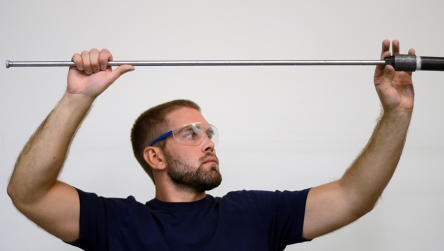
Figure 10 - Placing insertion rod in access port and tightening threaded port connector
Using a wrench, turn the port connector clockwise to finish tightening it (Figure 11). Take care not to overtighten the connector.
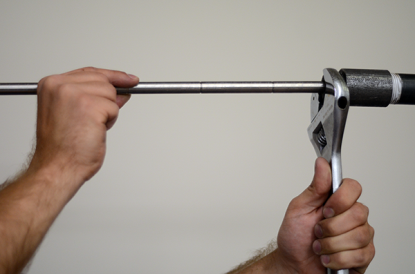
Figure 15 - Tightening port connector with wrench
Push the insertion rod until the wire coil is present in the testing atmosphere. The wire must now soak in the atmosphere; the amount of time to soak the wire is based on the temperature in the testing atmosphere. Table 2 shows the appropriate soak times.
|
Temperature in Testing Atmosphere |
Soak Time |
|
Above 1600°F |
30 minutes |
|
1550°F to 1599°F |
60 minutes |
| Below 1549°F | 90 minutes* |
*120 minutes recommended for target carbon potential atmospheres of 0.40% and lower
Table 2 - Soak times based on temperature in testing atmosphere
NOTE about soak times:
• Spring steels generally have a minimum carbon percentage of 0.50%C. SSi uses a carbon percentage that forms easily and maintains its shape with handling prior to being processed in a furnace.
• The CAT-100 %C-to-resistance relationship was developed based on one mill heat lot of spring steel, in order to ensure ease of use and traceability.
• Since the coil’s base carbon percentage is above 0.50%C, a longer soak time is necessary for lower target carbon potentials to ensure that the coil is in equilibrium with the atmosphere.
|
NOTICE!
Soaking coils for less time than recommended in Table 2 may result in adverse effects on carbon potential readings when the wire coil is tested with the CAT-100.
|